
Does home insurance cover rewiring? The honest answer is: it depends on your policy and on why the rewiring is needed. Many policies are written to respond to sudden damage, like a fire or a power surge, rather than to pay for upgrading old wiring. But policies differ, so the only way to know for sure is to check your own.
If your electrician has told you the wiring is old or unsafe, you’re probably asking this question with a sinking feeling. This guide covers what to look for in your policy, what to ask your insurer, and how a licensed electrician’s paperwork fits in. We’re electricians, not insurers or financial advisers, so treat this as general information only.
Does Home Insurance Cover Rewiring? It Comes Down to Your Policy
Home insurance is built around unexpected events. Think fire, lightning or a sudden surge that damages your switchboard. If something like that happens, your policy may respond to the damage, and the repair might include some electrical work.
What your policy says about the wiring itself is another matter. Some policies treat wear and tear, gradual deterioration and maintenance differently from sudden damage. The wording matters, and it varies between insurers.
The document that spells it out is your Product Disclosure Statement (PDS) and policy schedule. Read the sections on electrical damage, exclusions, wear and tear and maintenance. If the wording isn’t clear, ask your insurer to explain it in writing.
When Rewiring Might Not Be Covered
Rewiring done for upkeep or upgrade reasons is the kind of work people often find sits outside a claim. For example:
✔ Replacing old wiring that is simply worn out
✔ Bringing an older home up to current standards
✔ Upgrading wiring as part of a renovation
Whether your policy treats any of these as maintenance is up to the policy wording, so don’t assume either way. If the problem was known before something went wrong, that can also affect how a claim is looked at. Ask your insurer directly.
When Rewiring Might Be Part of a Claim
Sometimes rewiring comes up because of an insured event. If a house fire or electrical failure damages the wiring, the repair scope can include replacing affected cabling. Whether that is paid for depends on the cause, the policy and the insurer’s assessment.
Some policies also offer optional extras or add-ons. If you think you might have one, check your schedule. If you’re shopping for a policy, compare the PDS wording on electrical cover before you sign, because an add-on usually has to be in place before the damage happens.
Electrical Standards and Insurance Requirements
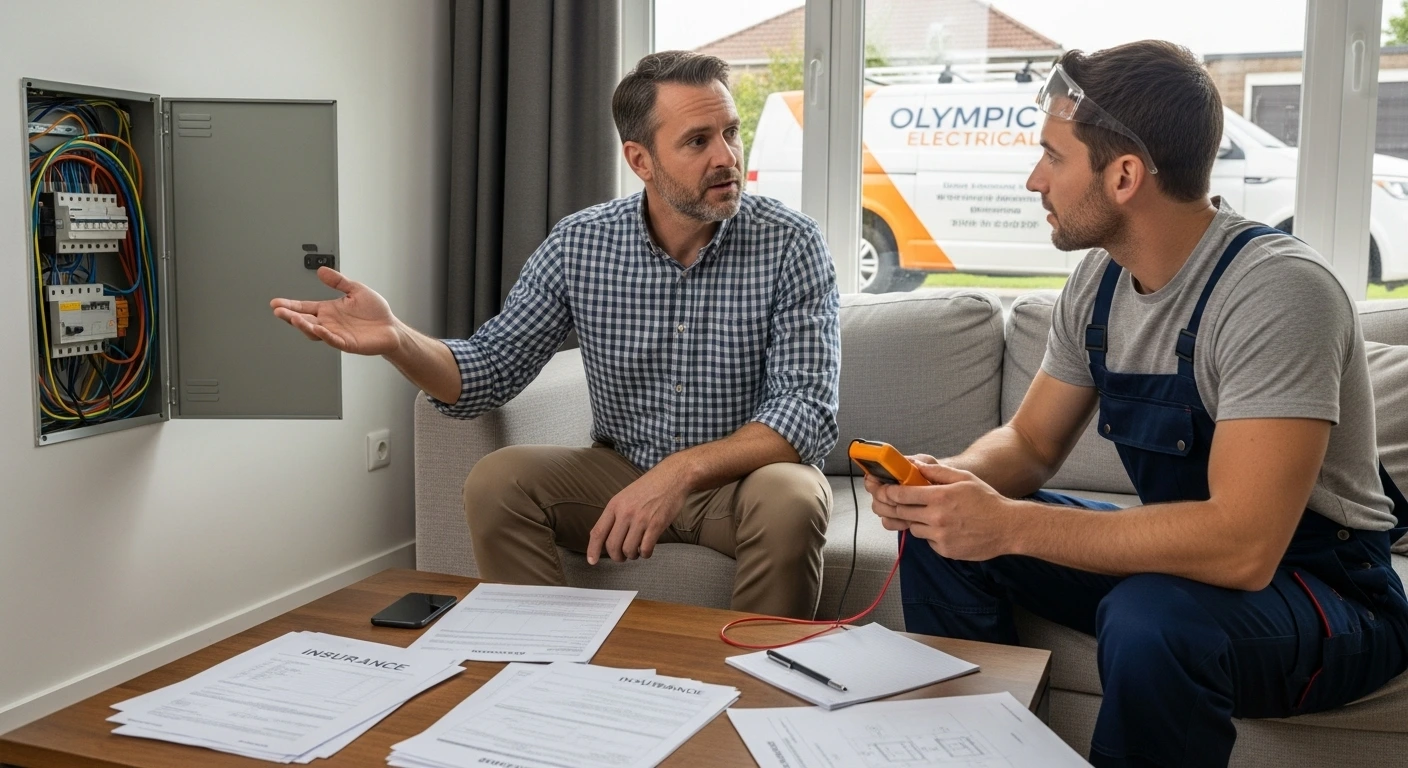
Insurers can ask about the condition of your home, including the electrical side. The national wiring standard is AS/NZS 3000, and licensed electricians work to it. Some insurers may ask for proof that electrical work was done by a licensed electrician. Others may ask questions about older wiring when you take out or renew a policy.
That is why paperwork matters. For most electrical work in NSW, your licensed electrician provides a Certificate of Compliance for Electrical Work (CCEW) once the job is done. Keep a copy with your home records. If you’re unsure which jobs need one, check with NSW Fair Trading.
Making an Insurance Claim for Electrical Damage
If your home suffers sudden electrical damage, make it safe first. Turn off power at the switchboard if you can do so safely and keep everyone clear. Then contact your insurer and be clear about what happened and when.
Your insurer will tell you what they need, but it usually helps to have:
✔ A written report from a licensed electrician
✔ Photos of the damage
✔ Invoices or receipts for any urgent repairs
An assessor may inspect the property. Don’t throw out damaged parts until the insurer says it’s okay. Ask your electrician to note in the report what they found, including the likely cause if it can be worked out. Vague notes slow things down.
How a Licensed Electrician Can Help
We can’t tell you what your insurer will decide, and we won’t pretend to. What we can do is look at your wiring and explain what we find in plain English. That can include:
✔ A safety inspection of your switchboard, circuits and power points
✔ A written report that you can pass on to your insurer
✔ Quoting the work, whether that is a partial fix or full house wiring replacement
Once the work is done by a licensed electrician, you get the right paperwork for it.
Real Costs vs Assumed Coverage: Know the Gap
Rewiring is a big job. What it costs depends on the size of the home, how accessible the cabling is, and whether the switchboard and power points need updating at the same time. We quote each job after looking at it.
Plenty of people assume insurance will cover the lot, then read the exclusions. Read them before you need them. It is far easier to plan for a rewire than to be caught out after a claim goes sideways.
What You Should Do Now
Don’t wait for a problem to find out where you stand. Here’s a simple checklist:
✔ Find your PDS and policy schedule and read the electrical and exclusions sections
✔ Ask your insurer how they treat old wiring, wear and tear and electrical damage
✔ Get a licensed electrician to inspect the wiring if you’ve noticed warning signs

Request a quote today and we’ll tell you what condition your wiring is in, in plain English.
Frequently Asked Questions
How do I know if my home needs rewiring?
Common signs include frequent tripping, discoloured or warm power points, buzzing sounds, a burning smell and an old fuse-style switchboard. A licensed electrician can inspect the wiring and tell you what needs doing.
What should I ask my insurer about rewiring?
Ask how your policy treats electrical damage, wear and tear and upgrades. Ask what evidence they want from an electrician, and whether any exclusions apply to older wiring. Get the answers in writing where you can.
What happens if I ignore old or unsafe wiring?
Old wiring can be a fire and shock risk. It may also complicate a claim if something goes wrong, so it’s worth dealing with early. Check your policy wording and speak to your insurer about your situation.
Worried about your wiring? Call Olympic Electrical on 02 8999 3691 or ask for a free quote. We’re happy to take a look.
