
Flickering lights, tripped breakers or a buzzing electrical panel often signal your switchboard needs attention. It is frustrating when something so critical stays hidden away and misunderstood, yet it controls every powered device in your home.
Think of your switchboard as the heart of your electrical system. If it is outdated or overloaded, the whole flow struggles. Common risks include:
✔ Old ceramic fuses that cannot handle modern appliances.
✔ Overloaded circuits that increase the chance of electrical fires.
✔ Unlabeled or mystery switches that make quick fixes impossible in an emergency.
According to Energy Safe NSW, older homes built before the 1990s often require switchboard upgrades to meet current safety standards. A modern switchboard not only improves electrical safety but can also handle the increasing load from air conditioning, EV chargers, and home offices.
At Olympic Electrical, we make it simple. We inspect, explain and upgrade switchboards to keep your home safe, efficient and compliant, backed by local Sydney service you can trust.
Stay safe, stay powered. Talk to us today about your switchboard. Let’s understand the components of a switchboard in great detail.
Understanding the Function of a Main Switchboard
The role of a main switchboard in your home
The moment you flick on a light or power up the kettle, your switchboard jumps into action. It’s the central control panel that divides electricity into separate circuits, managing where the power flows and how much it delivers.
Every cable, every spark of energy passes through this box. Without it, there’s no hot shower, no cooled fridge, and no working outlets.
How the switchboard fits into your home’s electrical system
From the street, electricity flows straight into your switchboard before heading out to specific rooms or devices. Think of it like a traffic controller, making sure each wire gets what it needs without a hitch.
A proper connection between the supply lines and your internal wiring keeps your oven heating, laptops charging, and safety intact.
Types of switchboards used in residential homes
Homes in Sydney usually run on either single-phase or three-phase systems depending on size and load. Older homes often rely on ceramic fuses, while newer ones benefit from streamlined circuit breakers and RCBOs.
Modern switchboards also make upgrades easier, especially when solar inverters or EV chargers are added to the mix.
Core Components of a Home Switchboard
Main switch and its purpose
If you ever need to cut the power instantly, the main switch is your go-to. This single switch cuts off electricity to the entire home, and it’s required for every legal installation.
In emergencies like flooding or electric fires, knowing where this switch is just as important as knowing your fire escape.
Circuit breakers and their configurations
Circuit breakers stand guard silently until they detect something wrong. They trip off the power during overloads or faults, keeping everything from wires to appliances protected.
It can be as feeble as a single-pole breaker for a light or a double-pole for an oven, they’re built for quick and safe power interruption.
Residual Current Devices (RCDs)
These are the life-savers in your switchboard. RCDs watch for sudden loss of current caused by electric shock, shutting off power in as quick as 0.03 seconds.
They’re mandatory across Australian homes thanks to AS/NZS 3000:2018, and we always install them in every upgrade we complete.
Surge protection devices
Power spikes can happen in storms – or when large appliances switch on. Surge protectors divert excess voltage away from your electronics, reducing the risk of fry-outs or damage.
For homes filled with tech or solar panels, we recommend surge protection for reliable, ongoing safety.
Understanding Residential Circuits and Breaker Types
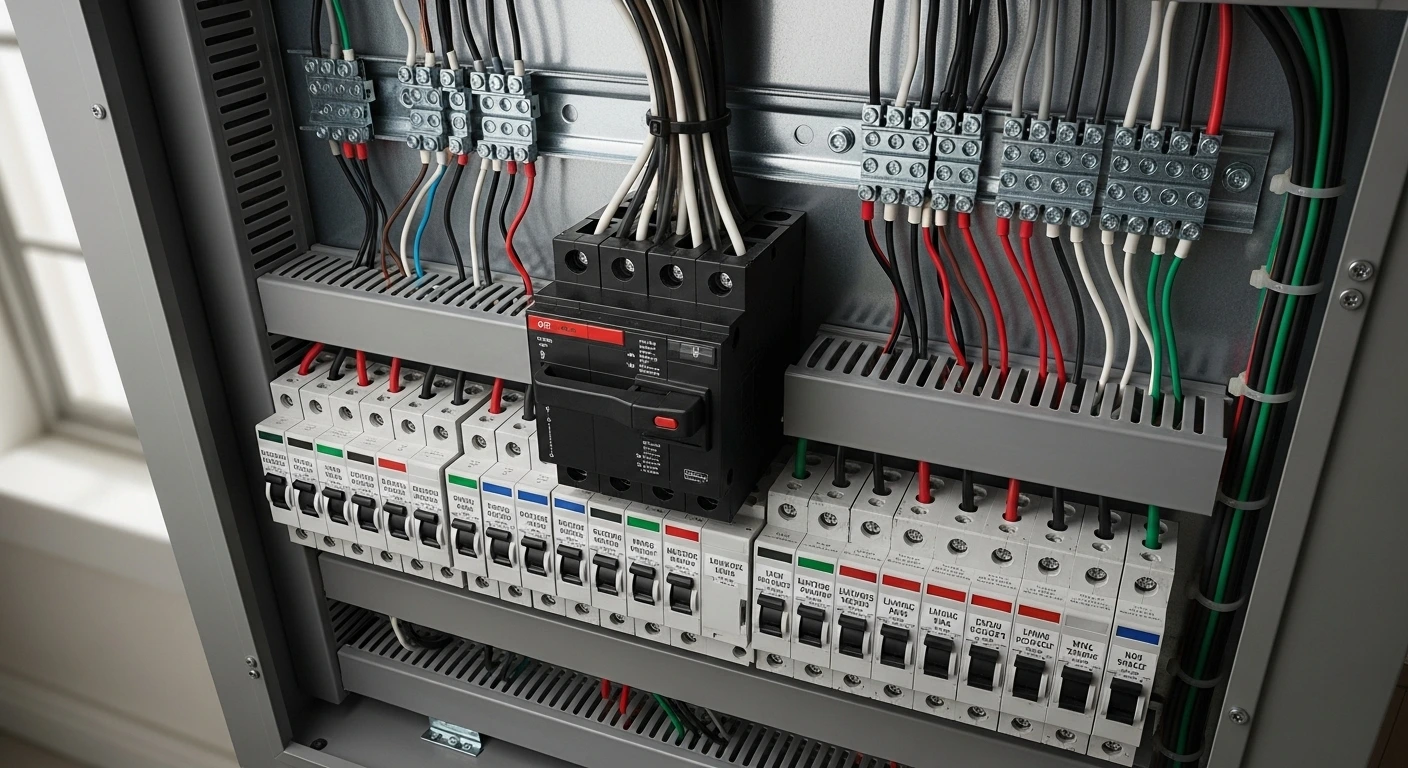
Common household circuits
You’ll often find your switchboard marked with labels like “Kitchen,” “AC,” or “Bathroom.” Each label represents a dedicated circuit with tailored amperage to run safely and efficiently.
Circuit separation makes sure a faulty kettle won’t knock out your entire house or put your fridge at risk.
Differentiating circuit breakers from fuses
Fuses melt. Breakers flip. That’s the easiest way to tell the difference. Breakers don’t need replacing – just a simple reset gets things going again.
We’ve replaced countless old ceramic fuses around Sydney with safer, resettable MCBs for peace of mind and faster fixes.
Recognising tripped or faulty breakers
If you spot a breaker sitting midway or turned off, it’s likely tripped. Try resetting it – if it trips again, it’s time to investigate deeper.
Frayed wires, loose terminals, or rust can cause faults that should be handled by someone who knows their way around a switchboard.
Safety Features and Regulations
Importance of proper grounding
Earth wiring carries electricity safely underground if something goes wrong. Without grounding, a metal tap or wet appliance could deliver a nasty and harmful shock.
It’s especially critical in areas like kitchens, bathrooms, or anywhere damp – common culprits for electrical surprises.
Protection against overload and shorts
Each circuit has a load limit. When too many devices pull power at once, wires can heat up until something gives in – or worse, catches fire.
We calculate proper circuit loads for every setup, making sure breakers trip before anything escalates.
High-voltage warning signs
Hear buzzing around your switchboard? Smell something like burning plastic? See lights flickering? Those are signs to act – fast.
They often hint at serious faults like insulation failure or current imbalances that need immediate electrical attention.
When to Inspect or Upgrade a Switchboard
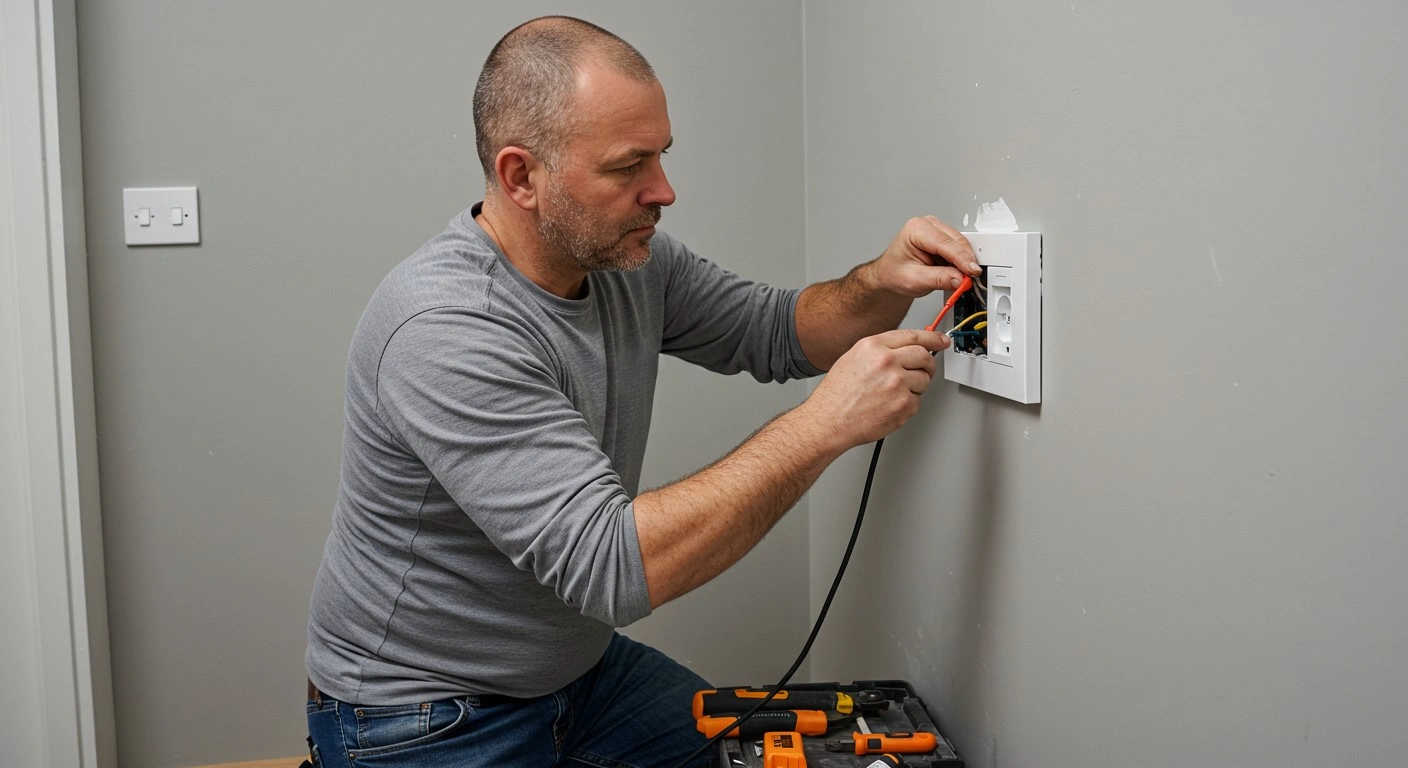
Lifespan and signs of a failing switchboard
If your panel is over 25 years old, or you’ve still got ceramic fuses, it’s time to consider an upgrade. Hot cables, discoloured RCDs or clicking breakers often mean internal wear needing expert inspection.
We conduct full switchboard health checks across Sydney – often revealing dated gear no longer meeting safety codes.
When to engage a licensed electrician
Never open or adjust a live panel yourself. Whether it’s an upgrade, fault check or general inspection, always call someone licensed and experienced.
Our team offers same-day service from Doonside to Dover Heights, backed by a lifetime labour guarantee.
Benefits of upgrading to a modern system
New panels host safer components, better energy flow, and smart features ready for solar setups or EV chargers. You’ll also avoid issues with insurance or non-compliant installations when selling or renovating.
Our installations always come with full certification and clear labelling for easy use and peace of mind.
Access, Labelling and Organisation Tips
Labelling circuits for clarity and ease
No one enjoys guessing which switch goes where in a blackout. Clear labels with printed tape or permanent marker save precious time during outages or repairs.
We always leave our clients with neat labels and diagrams, so there’s no room for confusion.
Safe access and lock mechanisms
Your switchboard must stay protected but accessible. Secure the panel doors with clips or locks to prevent tampering, while ensuring you can open it in emergencies.
Australian standards require a metre of clear space in front for safe access during maintenance or inspection.
Decoding panel diagrams and symbols
Modern panels come with layout diagrams marked with breaker types and room coverage. Understanding these symbols helps you match faults to specific areas quickly.
We provide full walkthroughs post-install, so every homeowner knows exactly how their system works.
Emergency Response and Isolation Procedures
Shutting down the main switch safely
Locate the main switch now – before you need it. During fire, flood, or electric shocks, flip it down fast and step clear of any wet areas.
We recommend placing a sticker or label near it identifying its purpose for quick access in emergencies.
Responding to electric shocks or panel faults
Stay calm. Don’t touch anyone in contact with current. Turn off the main switch and call 000 if anyone appears injured or unconscious from shock.
If safe, perform CPR only if you’ve been trained and the scene is no longer dangerous.
Preventative testing and checks
Press the ‘T’ button on your RCDs every three months to confirm proper function. If they don’t trip, they’re faulty and need replacing.
We suggest booking inspections every 3–5 years, or sooner if your setup shows any issues.
Frequently Asked Questions
How can I determine the correct panel size for my home?
Start with your total appliances and their amperage. If you use lots of high-demand gear like a pool heater or an EV charger, you’ll need a larger-capacity switchboard.
What’s the difference between a main breaker and a branch breaker?
The main breaker cuts power to your entire home. Branch breakers control individual circuits for rooms or appliances.
Can I upgrade the switchboard myself?
No – it’s illegal and extremely dangerous. Only a licensed electrician can safely upgrade or work on energised switchboards under Australian law.
What causes lights to dim when appliances run?
This usually means circuits are overloaded or wiring is too old. A panel upgrade or power redistribution can solve this issue.
How often should I test my RCDs or breakers?
RCDs should be tested every three months using the test button. Breakers don’t require routine testing but should be inspected if tripping becomes frequent.
When the Lights Go Out, What’s Really Behind the Wall?
There is one box in your house quietly doing all the heavy lifting, yet most of us ignore it until everything goes dark. That humble switchboard is like the unsung hero of your home until it trips, buzzes or throws a tantrum at the worst time.
You do not need to be an electrician to understand the basics. Knowing what is behind that panel saves you from panic Googling “why half my house lost power” at 10 pm. It also helps you spot the early warning signs, like burning smells or hot switches, before they turn into expensive mistakes.
Think of it as learning just enough to keep your home safe and your Netflix binge uninterrupted.
At Olympic Electrical, we make it easy. We explain what matters, upgrade what needs fixing and leave you with a safer, smarter electrical setup, minus the tech jargon.
Want to know what your switchboard is really saying? Let’s find out together.
